

How Fatherhood Shapes the Sound: Eric Selby’s Five. and the Art of Making Music While Raising Kids
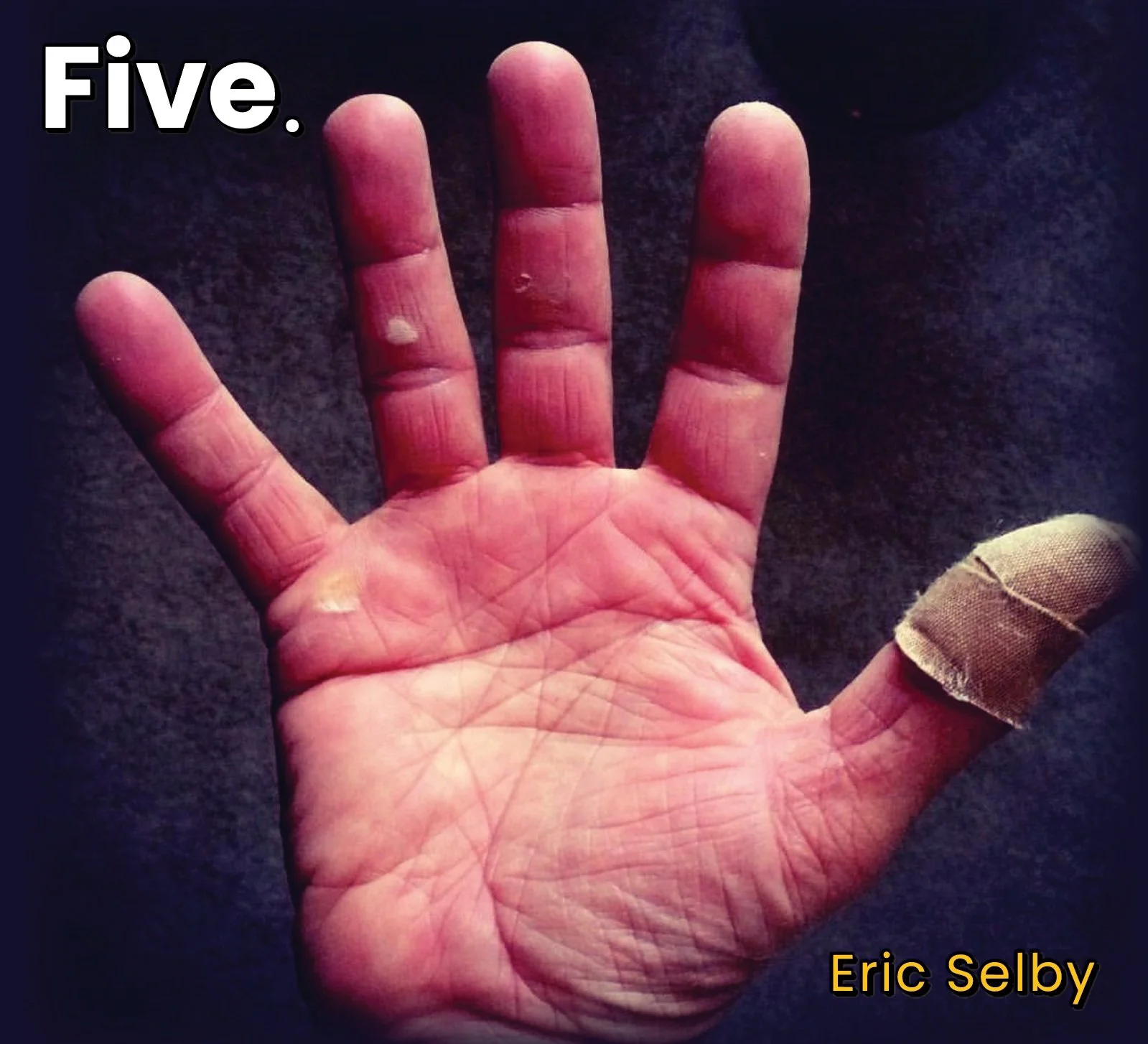
There is an honesty that only seems to arrive after you’ve spent years showing up for other people. After bedtime stories, school pickups, family vacations and those quiet late night worries that never really go away, something shifts in the way you see the world. And if you’re a songwriter, it changes the way you write, too. That’s where Eric Selby finds himself on Five.
This is an album about parenthood, but not in any obvious or sentimental way. Instead, Five. is shaped by fatherhood in a deeper, more meaningful sense; in its patience, its clarity and the awareness that time is precious.
One of the first things you notice is how unhurried the record feels. The songs are allowed to unravel in a natural flow finding their own pace. That feels intentional.
When you have spent years raising kids, your relationship with time changes. You stop living only in the moment. You start thinking in terms of years and futures. You become more reflective and more measured. That perspective runs right through this album.
Many of these songs are rooted in acceptance. Of where Selby is personally, of where the world is right now and of the responsibilities that come with both. He’s very much focused on telling the truth as clearly and honestly as he can.
Water becomes one of the central emotional threads running through Five. On songs like “The Water” and “The Chesapeake,” Selby keeps returning to rivers, tides, and shorelines as places where real life has happened. For him, water is tied to family memories: vacations, downtime, moments when everything slows enough for connection to happen. It represents calm, reflection and continuity.
“The Chesapeake,” in particular, has a quiet power. Framed around life working at sea, it brings together responsibility and devotion to family without ever becoming heavy handed. Lines about thinking of parents, spouses, and children are sincere. Anyone who has tried to balance work, creativity and family life will recognize that emotional tension.
Selby says:
““The Chesapeake” is a first person account about someone who works on a ship that is based out of the Delmarva Peninsula. For people who might not know, Delmarva references the water touching Delaware, Maryland and Virginia. One verse is a tip of the hat to my Maryland-based family”
“I think of my father as I sweat in the mid-day sun
I think of wife, in the calm, when the day is done
I think of my mother, she is doing the best she can
I hope my children are building castles made of sand”
The same honesty runs through “Spare Oom,” which is one of the album’s most touching moments. At its heart, it’s about trying not to lose the sense of wonder we’re born with and trying to pass that on to your kids. Parenthood sharpens that awareness. You watch your children grow up, and you hope they don’t lose their curiosity or imagination along the way. In wishing that for them, you’re often wishing it for yourself too. Selby draws on childhood stories and fantasy imagery to explore that idea, reflecting on how easy it is to grow cynical and how important it is to resist it.
“My song, “Spare Oom,” is about trying to keep the wonder we had as children throughout our lives. In it, I use the children’s stories of “The Lion, the Witch and the Wardrobe” and “Peter Pan” as reference points of adolescent wonder and hope that my children (who are all now in their twenties and no longer children) also keep that important wonder into adulthood:
“Hope my daughters will wonder
Keeping their flames burning so bright
There’re so many distractions
Not to mention, the Turkish Delight”
Longtime listeners will also hear the influence of The Beatles, a band that has shaped Selby’s musical worldview for decades and that he shared with his children while they were growing up. That connection surfaces on “I Know a Place,” where he uses characters from Yellow Submarine as metaphors for political and social unease. Beneath the clever references is something very familiar to any parent which is the desire to protect your family from darkness and uncertainty, to imagine somewhere safer and more hopeful.
Musically, Five. reflects the same values as its songwriting. The production is open and grounded in performance. You can hear real musicians playing together. You can hear space in the arrangements. The playing is tight. The vocals are honest and unpolished in the best way. Even at its most expansive, the album never loses its sense of intimacy.

One of the most refreshing things about Five. is that it doesn’t frame parenthood as something that gets in the way of creativity. It presents it as something that deepens parenting. There is no sense of lost ambition or missed chances. Instead, Selby sounds more focused than ever before. He has more to draw from now - more perspective, more reason to tell the truth. This is what a creative life can look like after children.
For musicians who are also parents, and for anyone juggling creativity with responsibility, this album resonates deeply. It’s a reminder that art doesn’t stop when life gets complicated. Five. isn’t just a strong record. It’s a generous, thoughtful one, and it stands as some of Eric Selby’s most honest works to date.
Find out more about Eric Selby on his Website